)
)
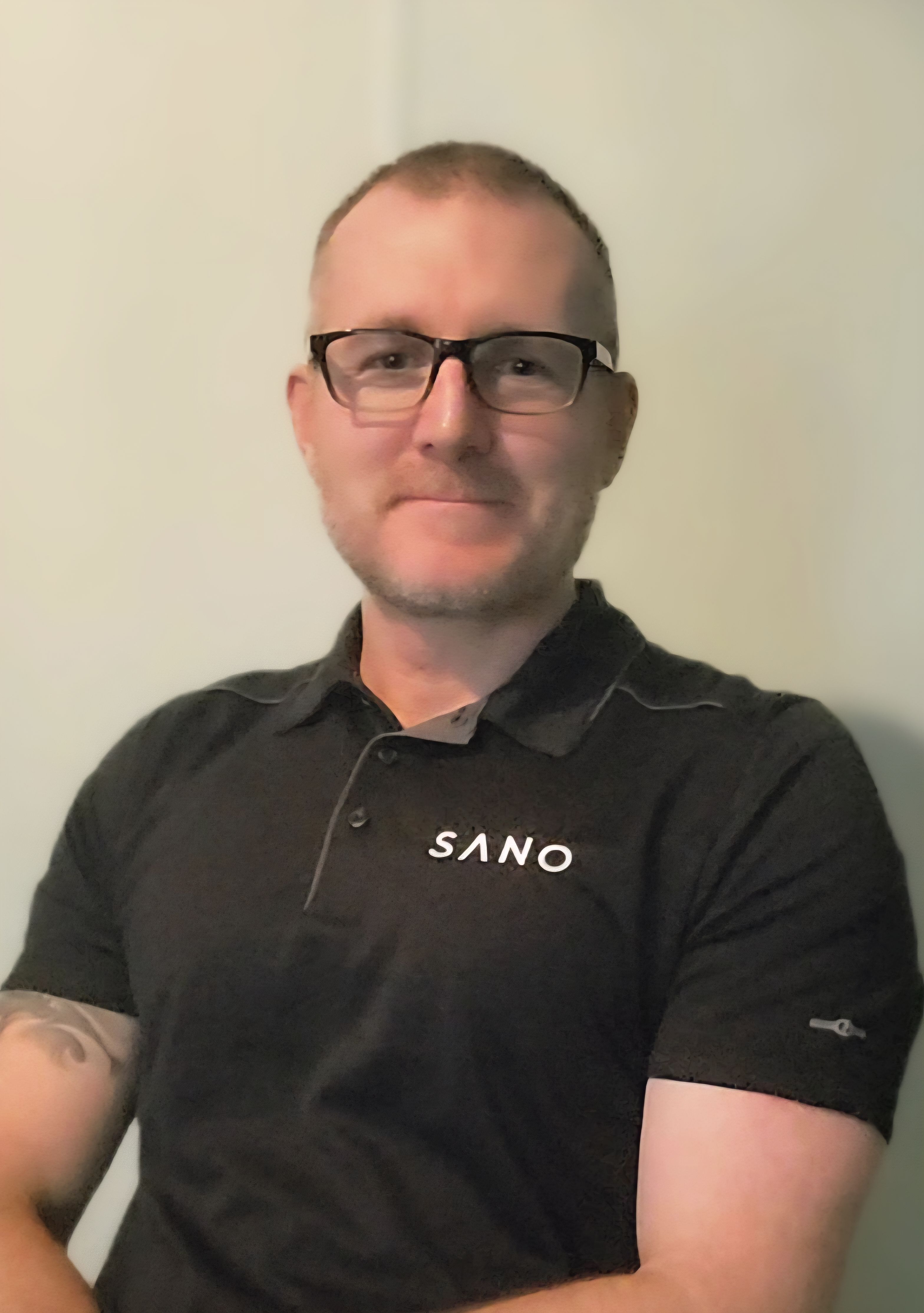
In this technical showcase, Dr. Richard Turner will present the science and impact of SANO Health’s industry-specific 1-day Mental Health Response Training (MHRT) program which has been developed in conjunction with Monash University School of Psychological Sciences. Drawing on peer-reviewed methodologies and real-world data, this presentation will provide leaders with critical insights into the mental health landscape of the FIFO workforce. Dr. Turner will explain the rationale behind developing a tailored, evidence-based training program specifically designed for the unique challenges faced by FIFO operations. The session will highlight how this structured approach equips workers with the skills to better recognise, respond to, and support colleagues who may be struggling with mental health issues. Dr. Turner will also share preliminary impact data from pilot MHRT sessions conducted across several Byrnecut operations, offering an early look at the program’s effectiveness in enhancing workforce capability and mental health support on the ground.
The session will be run by our trained ERP therapy specialists. They will provide a safe space to share and will invite session participants to share their experiences in ERP implementations and on-going business operations. Our specialists will discuss the latest techniques in identifying and relieving the system related pain points. They will share practical advice on dealing with manual and fragment business processes and provide frameworks to move forward with confidence.
Modern operations—whether in mining, energy, infrastructure, or manufacturing—generate enormous volumes of spatial and visual data. Yet these insights often remain dispersed across disconnected systems, limiting their value and slowing decision making. This presentation explores how combining 3D reality capture, 360° visual scanning, and AI powered image recognition can transform fragmented information into a unified, constantly evolving living source of truth for any asset intensive operation.
By integrating detailed spatial models with continuous visual documentation, organisations can build high fidelity digital environments that accurately mirror real world asset conditions. AI techniques then analyse this consolidated information, automatically identifying anomalies, patterns of degradation, and emerging risks. This not only enhances situational awareness but elevates inspection efficiency, allowing teams to focus their expertise where it matters most and enabling more targeted, data driven maintenance strategies.
When these rich insights are combined with operational telemetry and historical data, organisations gain a holistic view of asset health, performance limits, and operational capacity. The result is a predictive, insight driven ecosystem that supports smarter planning, improved reliability, and safer, more efficient operations.
This presentation demonstrates how diverse data streams—once siloed—can be harmonised into a single, living intelligence framework capable of supporting any modern asset driven industry.

Autonomous haulage is often viewed as a transformation that requires entirely new mine designs, new truck fleets and extensive infrastructure. For many brownfield operations, these perceived requirements create a major barrier to adoption.
This session explores how autonomy can be deployed in existing mining operations without rebuilding the mine. Drawing on real-world deployments across more than 25 projects and 2,400 autonomous trucks globally, EACON Mining Technology will examine how modern autonomous haulage systems can integrate with existing fleets, haul roads and operating practices.
The presentation will explain how OEM-agnostic systems, distributed architecture and flexible drive-by-wire platforms allow autonomy to operate within current mine layouts while supporting mixed fleets of autonomous and manned vehicles. Through examples from operational mine sites, the session will highlight how mines have successfully introduced autonomy while minimising infrastructure changes and maintaining production.
Designed for mining executives, operational leaders, engineers and innovation teams, the session provides a practical look at how autonomous haulage can be introduced at scale within existing mining operations.

The mining industry is at a pivotal moment where operational excellence and strategic agility increasingly depend on how effectively organisations use their operational and business data. Although mines generate vast information across exploration, development, extraction, processing, and logistics, many still struggle to convert this data into actionable insight that builds resilience and competitive advantage.
This presentation explores the key barriers holding companies back, including legacy systems, fragmented data environments, siloed decision making, and the complexity of scaling digital initiatives across diverse operational settings. It examines how digital transformation is reshaping mining business practices, highlighting the role of artificial intelligence, digitalisation, cloud platforms, and emerging technologies in accelerating innovation and enabling safer, more efficient, and more sustainable operations. A core component of the session is a practical look at what an end to end integrated technology architecture looks like for a modern mining enterprise. We will break down the architectural layers, from data ingestion and contextualisation through platforms, analytics, enterprise applications, and frontline operational systems, showing how each contributes to real time visibility, advanced analytics, predictive modelling, automated workflows, and strategic decision making at scale.
The session will illustrate the characteristics of a digitally mature mining organisation and show how Schneider Electric and AVEVA are enabling customers on this transformation journey.

Mitchell Services used AI-powered Causal Network Topology Analysis (CaNeTA) to answer a critical question: are our safety controls actually working, or are we getting lucky? By mapping causal pathways across incident reports, critical risk standards, corporate risk data and work order records, CaNeTA revealed where risk propagates, where controls degrade, and where near misses masked system weakness. Backed by 56,500 field verifications from contract drilling across remote Australia, this session shares key findings, lessons learned, actionable insights, and a demo of Libero AI's agentic AI analysis platform.
The primary objective in modern mining is clear: reduce expenditure across the value chain. Yet, siloed data and disparate systems continue to create high administrative loads and operational bottlenecks for supervisors and operators.
Discover how Salesforce—powered by Agentforce, Field Service, MuleSoft, and Informatica—simplifies complex tech stacks and integrates seamlessly with SAP. Learn how a modular, off-the-shelf system of engagement can consolidate your applications, delivering consumer-grade, offline-capable mobile experiences for workforce management (employees and contractors) and maintenance operations (fixed plant and mobile assets).
Free your teams from administrative backlog to focus on what matters: addressing critical operational challenges at speed.

In an industry rapidly embracing automation, AI, and digital platforms, technology is often positioned as the primary driver of transformation. However, in mining, technology is only the enabler — not the outcome. The real value is unlocked through human decision-making, alignment, and execution. This session explores the critical role of negotiation and influencing in ensuring that technological investments deliver their intended impact. From vendor selection and contract structuring, to cross-functional alignment and on-site adoption, every stage of the technology lifecycle depends on people making decisions, managing trade-offs, and driving change. Drawing on the ENS global negotiation methodology, this presentation will highlight how structured negotiation and influencing capabilities can reduce risk, accelerate implementation, and significantly improve commercial and operational outcomes. In a sector where margins, safety, and sustainability are under constant pressure, the organisations that succeed will not necessarily be those with the most advanced technology, but those with the capability to align people behind it. Technology may set the direction, but it is negotiation and effective influencing that will ultimately determine the level of success.